


FiiO K17 R2R Desktop DAC and Network Headphone Amplifier
We are an authorized FiiO dealer!
Email Your Question
Pairs well with
Free Shipping
We only ship within Canada. Items purchased online qualify for free shipping!
30 Day Returns
All products are eligible for returns within 30 days. All original packaging is required.
Installation & Calibration
Ask about our installation services on home theatre & stereo equipment along with automation.
FiiO K17 R2R Desktop DAC and Network Headphone Amplifier
Overview
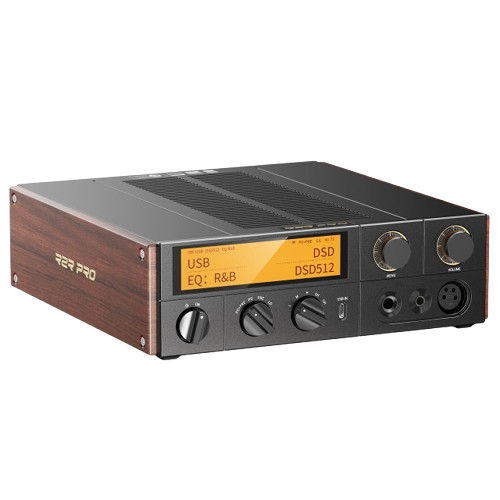
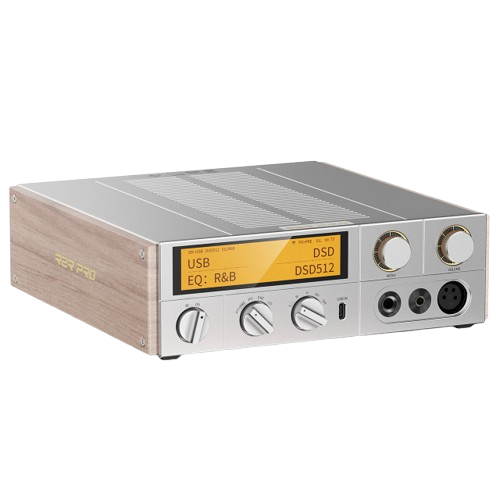
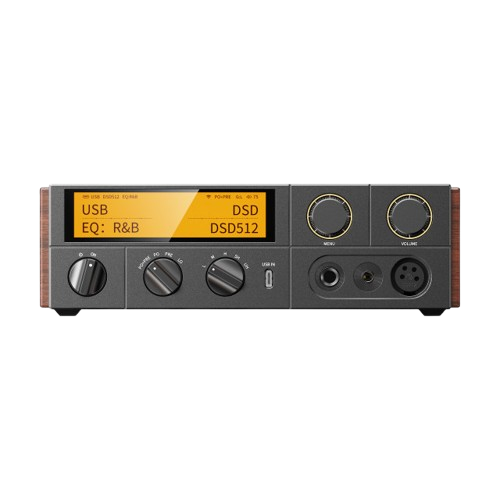
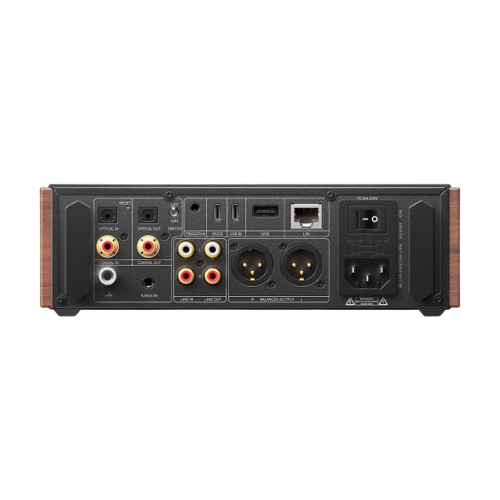
The FiiO K17 R2R is a desktop DAC, headphone amplifier, and network audio endpoint built around FiiO's own 24+5bit segmented R2R PRO resistor-ladder DAC, a design that swaps the usual delta-sigma chip for a resistor array. A fully discrete Class-AB amplifier drives four headphone outputs — 6.35mm single-ended, 3.5mm, 4.4mm balanced, and XLR4 balanced — while RCA and XLR3 line outputs cover a separate amp or active speakers. Beyond USB, coaxial, and optical, it connects over Gigabit Ethernet or Wi-Fi with Roon Ready, AirPlay, and Qplay certification, plus NAS playback, and a built-in Qualcomm QCC5125 Bluetooth chip with LDAC support covers wireless listening. The chassis pairs a silver finish with imported ash wood side panels or a black finish with black walnut, so no two units look quite alike. It's built for listeners who want to hear FiiO's resistor-ladder DAC design against a conventional chip-based DAC, while moving between wired network audio, USB, and Bluetooth sources on the same desk.
Simcoe Audio Video Insight
Unlike the standard K17, which has Roon Ready certification listed as in progress, the K17 R2R's certification is already confirmed and finalized, alongside AirPlay and Qplay. If Roon support matters to your setup right now rather than at some point down the road, that's the more immediate answer between the two — the R2R version, not the standard K17, is the one with certification already in place today.
Best for the FiiO K17 R2R Desktop DAC and Network Headphone Amplifier: If you're deciding between R2R character and a conventional chip DAC, spend time comparing the K17 R2R against the standard K17 on the same tracks before committing — the connector layout, network features, and chassis size are otherwise identical, so the DAC architecture is the real decision point.
More Details
Why It Wins
- FiiO proprietary 24+5bit segmented R2R PRO DAC: A resistor-ladder design built specifically for this unit, offering a different tonal character than the chip-based DACs used in most network-connected desktop amps.
- Roon Ready, AirPlay, and Qplay certification, already confirmed: Broader, already-finalized network streaming compatibility than its closest sibling, the standard K17.
- Natural wood side panels: Ash on the silver chassis or black walnut on the black chassis, with grain that varies unit to unit, giving each K17 R2R a distinct look.
What Makes It Different
The K17 R2R shares its chassis, four headphone outputs, and network connectivity layout with the standard K17, but the DAC architecture is genuinely different — a resistor-ladder design instead of the AK4191/AK4499EX chip set — which is the main reason to choose one over the other. It also has an edge in certification status, since Roon Ready is already confirmed here versus in-progress on the standard K17, and the wood side panels give it a distinct look compared to the standard K17's finish.
Technical Highlights
- 24+5bit segmented R2R PRO resistor array: The upper five bits are handled through 31 thermometer-coded resistors, a more elaborate resistor-ladder implementation than a basic R2R design.
- Built-in Qualcomm QCC5125 Bluetooth with LDAC and aptX Adaptive: Covers high-quality wireless listening without an external Bluetooth receiver.
- NAS playback over NFS and SMB: Lets the unit pull music directly from network-attached storage as part of its Roon Ready and network audio functionality.
Buyers Guide
Who This Is For
- The listener comparing R2R and chip-based DAC sound: Someone weighing the K17 R2R against the standard K17 and choosing the resistor-ladder DAC's tonal character.
- The Roon household: Anyone who wants Roon Ready certification already in place today, rather than tracking an in-progress certification on a related model.
- The person who cares about how their gear looks: The ash or black walnut wood side panels are a genuine visual and material difference from the standard K17's finish, appealing to anyone who wants their desktop rig to look a bit different from the norm.
Ideal Use Case
- Network-connected reference listening: Streaming via Roon, AirPlay, or NAS playback over Ethernet or Wi-Fi as the primary source.
- Multi-headphone desktop system: Using the four headphone outputs to switch between headphones with different connectors.
- Wireless casual listening: Streaming from a phone over the built-in Qualcomm Bluetooth with LDAC when a wired connection isn't practical.
What To Pair It With
- A Roon Core or NAS: The already-confirmed Roon Ready certification and NAS playback support make it a natural fit for a networked music library.
- Headphones with balanced 4.4mm or XLR4 cables: The balanced outputs are where the R2R DAC's power and character come through most fully.
- A separate power amp or active speakers: The XLR3 balanced or RCA line outputs let it work as a network-connected preamp source.
Alternative Options
If you'd rather have a chip-based DAC instead of the resistor-ladder design, the standard FiiO K17 shares the same chassis, connector layout, and network features with an AK4191/AK4499EX DAC set. For substantially more output power along with HDMI input and output, FiiO's K19 sits above both as the flagship of the desktop lineup.
FiiO K17 R2R Desktop DAC and Network Headphone Amplifier Specifications
| General Information | |
|---|---|
| Model | FiiO K17 R2R |
| Type | Desktop DAC, headphone amplifier, and network audio endpoint |
| Colours | Black (black walnut wood side panels), Silver (ash wood side panels) |
| Audio | |
| DAC Architecture | FiiO proprietary 24+5bit segmented R2R PRO resistor array (upper 5 bits decoded via 31 thermometer-coded resistors) |
| DSP / ADC | M21586Q DSP (64-bit floating point, 360MHz); ES9821Q ADC |
| Processors | X2000 multi-core master processor; ESP32-S3 co-processor (dual-core Xtensa LX7, up to 240MHz) |
| Amplifier | Discrete Class-AB transistor design, ON Semiconductor MJE243/253 transistors |
| Power Output, 6.35mm (Ultra High Gain) | ≥1800mW+1800mW (16Ω); ≥1850mW+1850mW (32Ω); ≥240mW+240mW (300Ω), THD+N <1% |
| Power Output, 4.4mm/XLR4 Balanced (Ultra High Gain) | ≥1800mW+1800mW (16Ω); ≥4000mW+4000mW (32Ω); ≥950mW+950mW (300Ω), THD+N <1% |
| Headphone Output Performance (6.35mm, Ultra High Gain) | THD+N <0.0005% (1kHz/-12dB@32Ω); SNR ≥124dB (A-weighted); noise floor <5µV |
| Headphone Output Performance (Balanced, Ultra High Gain) | THD+N <0.00049% (1kHz/-13dB@32Ω); SNR ≥124dB (A-weighted); noise floor <7.9µV |
| Line Output Performance | Single-ended (RCA): THD+N <0.00053%, SNR ≥121dB, 2.5Vrms; Balanced (XLR3): THD+N <0.00045%, SNR ≥125dB, 5Vrms |
| Frequency Response | 20Hz–20kHz: attenuation <0.05dB; 20Hz–90kHz: attenuation <3dB |
| Clock | 2x ACCUSILICON AS318-L femtosecond crystal oscillators (45.1584MHz, 49.1520MHz) + 1x FiiO-customized femtosecond oscillator (12MHz) |
| Tuning | 31-band lossless PEQ with DRC/DRE, limiter, compressor, and AUTO EQ headphone-profile matching |
| MQA | Full MQA decoding supported |
| Connectivity | |
| Digital Inputs | USB (USB-C x3, USB-A x1; up to 768kHz/32bit, DSD512 native), optical (up to 96kHz/24bit), coaxial (up to 192kHz/24bit, DSD64) |
| Analog/Line Inputs | RCA (single-ended), 4.4mm (balanced) |
| Bluetooth | Qualcomm QCC5125 chip; SBC, AAC, aptX, aptX LL, aptX HD, aptX Adaptive, LDAC codecs |
| Network | Gigabit Ethernet; AP6256 Wi-Fi module, 2.4G and 5G bands; Roon Ready, AirPlay, and Qplay certified; NAS playback (NFS/SMB) |
| Headphone Outputs | 6.35mm single-ended, 3.5mm, 4.4mm balanced, XLR4 balanced |
| Line Outputs | RCA (single-ended), XLR3 (balanced) |
| Controls | 3.93-inch LCD touchscreen (240x1020, bezel-less), 5 control knobs, infrared remote control |
| Physical Specifications | |
| Chassis | Black chassis with imported black walnut side panels, or silver chassis with imported ash wood side panels; natural wood grain varies by unit |
| Dimensions | Approximately 244.6 x 213 x 66.8mm |
| Weight | Approximately 2750g |
| Power | |
| Power Supply | Custom 35W low-noise linear transformer, five 4700µF capacitors, multi-stage LDO regulation (TPS7A47/7A33) |
| Protection | Headphone amp and transformer temperature protection, output overload/DC protection, input overcurrent protection |