


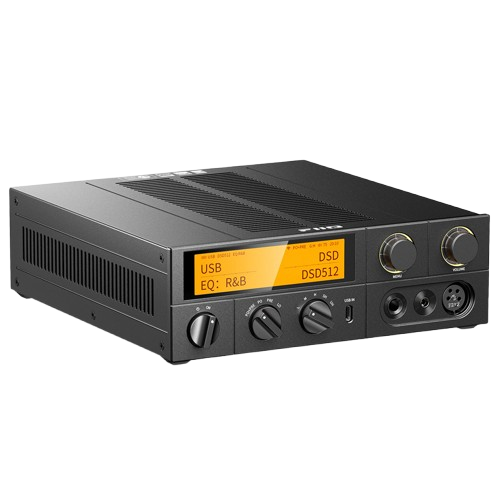
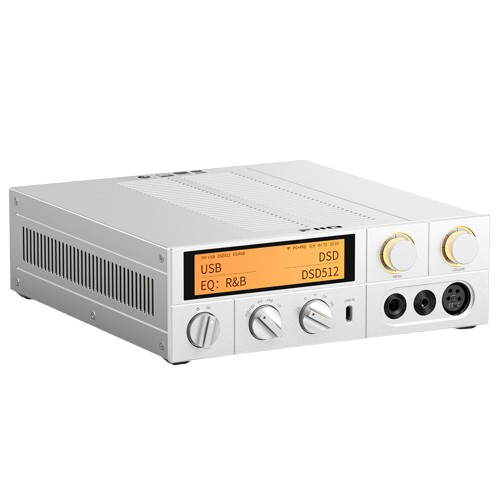
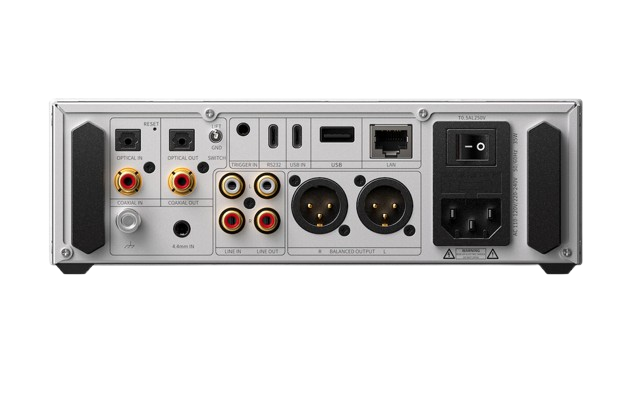
FiiO K17 Desktop DAC and Network Headphone Amplifier
We are an authorized FiiO dealer!
Email Your Question
Pairs well with
Free Shipping
We only ship within Canada. Items purchased online qualify for free shipping!
30 Day Returns
All products are eligible for returns within 30 days. All original packaging is required.
Installation & Calibration
Ask about our installation services on home theatre & stereo equipment along with automation.
FiiO K17 Desktop DAC and Network Headphone Amplifier
Overview
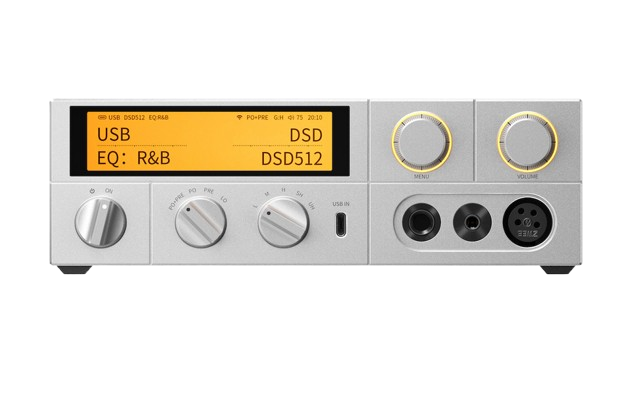
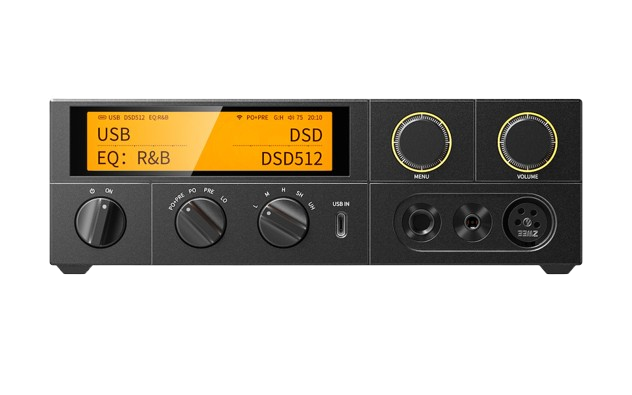
The FiiO K17 is a desktop DAC, headphone amplifier, and network audio endpoint built on an AK4191 and dual AK4499EX chip-based DAC, with two AK4499EX converters handling each channel independently on a fully differential circuit. A discrete Class-AB amplifier stage drives four headphone outputs — 6.35mm single-ended, 3.5mm, 4.4mm balanced, and XLR4 balanced — while RCA and XLR3 line outputs cover a separate amp or active speakers. Gigabit Ethernet and dual-band Wi-Fi add network audio playback alongside the usual USB, coaxial, and optical inputs, and FiiO has confirmed the K17 is in the process of Roon Ready certification. It's built for listeners who want four different headphone connector types covered on one desktop unit, along with network audio input, without stepping up to K19 flagship pricing.
Simcoe Audio Video Insight
Worth knowing if Roon is part of your setup: as of now, the K17's Roon Ready certification is confirmed as in progress by FiiO, not yet finalized. If Roon compatibility is a hard requirement today rather than something you're willing to wait on, check current certification status before buying, or look at the K17 R2R, which carries Roon Ready certification already in place alongside AirPlay and Qplay.
Best for the FiiO K17 Desktop DAC and Network Headphone Amplifier: Match your headphone's connector directly to one of the four available jacks (6.35mm, 3.5mm, 4.4mm balanced, or XLR4 balanced) rather than relying on an adapter — with four distinct outputs built in, the K17 is one of the few units where you likely won't need one.
More Details
Why It Wins
- AK4191 and dual AK4499EX DAC chip set: Two flagship converters, one dedicated per channel, on a fully differential circuit for detailed, low-distortion decoding.
- Four separate headphone outputs: 6.35mm, 3.5mm, 4.4mm balanced, and XLR4 balanced jacks cover nearly every headphone cable and connector type without adapters.
- Up to 4000mW balanced output into 32 ohms: Substantial headroom that also covers genuinely demanding planar and dynamic headphones.
What Makes It Different
Most desktop DAC/amps standardize on one or two headphone jack types and expect you to carry adapters for anything else. The K17 builds in four separate outputs, so headphones with different stock cables just plug straight in. It sits below FiiO's K19 flagship in output power and DAC chip tier, but above the K15 in headphone connector variety and touchscreen control — positioning it as the mid-tier network-connected option in FiiO's current desktop lineup. Its closest sibling, the K17 R2R, shares the same chassis, connector layout, and network features but swaps in a resistor-ladder DAC design instead of the AK4499EX chips.
Technical Highlights
- Power output ≥4000mW+4000mW at 32 ohms (4.4mm/XLR4 balanced, ultra high gain): Among the higher balanced output figures short of FiiO's K19 flagship.
- 31-band lossless PEQ with dual-engine limiter: Fine-grained tone control alongside dynamic range management, more extensive than the 10-band PEQ on the K15.
- 3.93-inch bezel-less LCD touchscreen: Direct on-unit control of inputs, outputs, and settings without needing the FiiO Control app for every adjustment.
Buyers Guide
Who This Is For
- The multi-headphone household: Someone who owns headphones with different stock cable connectors and wants to plug each one in directly rather than carrying adapters.
- The network audio listener who also wants serious headphone power: Anyone who wants Ethernet or Wi-Fi streaming alongside a headphone amp strong enough for demanding planar or dynamic headphones.
- The Roon user willing to wait, or comfortable with current status: Listeners tracking FiiO's in-progress Roon Ready certification who are fine using other network audio options in the meantime.
Ideal Use Case
- Multi-headphone desktop system: Switching between several headphones with different connectors without needing adapters.
- Network-connected listening station: Wired to a home network over Ethernet for streaming without a permanently connected computer.
- High-power headphone driving: Running demanding planar or dynamic headphones off the balanced 4.4mm or XLR4 outputs.
What To Pair It With
- Headphones with XLR4 or 4.4mm balanced cables: The K17's balanced outputs and 4000mW power rating are built to take full advantage of balanced headphone cables.
- A home network with Ethernet available: Gigabit Ethernet gives the most stable connection for the K17's network audio endpoint functionality.
- A separate power amp or active speakers: The XLR3 balanced or RCA line outputs let it serve as a network-connected preamp source.
Alternative Options
If you'd rather have a resistor-ladder DAC in the same chassis and connectivity layout, FiiO's K17 R2R offers the same four headphone outputs and network features with an R2R DAC design and wood side panels, plus Roon Ready certification already confirmed. For considerably more output power and HDMI connectivity, FiiO's K19 sits above the K17 as the flagship of the desktop lineup.
FiiO K17 Desktop DAC and Network Headphone Amplifier Specifications
| General Information | |
|---|---|
| Model | FiiO K17 |
| Type | Desktop DAC, headphone amplifier, and network audio endpoint |
| Colours | Black, Silver |
| Audio | |
| DAC Chips | AK4191 + dual AK4499EX per channel |
| DSP / ADC | M21586Q DSP (64-bit floating point, 360MHz); ES9821Q ADC |
| Amplifier | Discrete Class-AB transistor design, ON Semiconductor MJE243/253 transistors |
| Power Output, 6.35mm SE (Ultra High Gain) | ≥1800mW+1800mW (16Ω); ≥1850mW+1850mW (32Ω); ≥240mW+240mW (300Ω), THD+N <1% |
| Power Output, 4.4mm/XLR4 Balanced (Ultra High Gain) | ≥1800mW+1800mW (16Ω); ≥4000mW+4000mW (32Ω); ≥950mW+950mW (300Ω), THD+N <1% |
| Headphone Output Performance (6.35mm, Ultra High Gain) | THD+N <0.0005% (1kHz/-12dB@32Ω); SNR ≥124dB (A-weighted); noise floor <5µV |
| Single-Ended Line Output (RCA) | THD+N <0.00053% (1kHz/-10dB@10kΩ); SNR ≥121dB (A-weighted); noise floor <2.2µV; line output level 2.5Vrms |
| Balanced Line Output (XLR3) | THD+N <0.00045% (1kHz/-10dB@10kΩ); SNR ≥125dB (A-weighted); noise floor <2.6µV; line output level 5Vrms |
| Clock | 3x ACCUSILICON femtosecond crystal oscillators (AS318-L, AS318-Pro) |
| Tuning | 31-band lossless PEQ with dual-engine limiter (DEL) |
| Connectivity | |
| Digital Inputs | USB, optical, coaxial |
| Analog/Line Inputs | RCA (single-ended), 4.4mm (balanced) |
| Network | Gigabit Ethernet; AP6256 Wi-Fi module, 2.4G and 5G bands; in the process of Roon Ready certification |
| Headphone Outputs | 6.35mm single-ended, 3.5mm, 4.4mm balanced, XLR4 balanced |
| Line Outputs | RCA (single-ended), XLR3 (balanced) |
| Controls | 3.93-inch LCD touchscreen, 5 control knobs, infrared remote control |
| Physical Specifications | |
| Dimensions | Approximately 244.6 x 213 x 66.8mm |
| Weight | Approximately 2750g |
| Power | |
| Power Supply | Custom 35W low-noise linear transformer, multi-stage LDO regulation |
| Protection | Headphone amp and transformer temperature protection, output overload/DC protection, input overcurrent protection |
| In the Box | |
| Included Accessories | AC power cord, remote control, XLR4 plug cover, fuse, 2x USB data cables, headphone plug adapter, quick start guide, warranty card |