




FiiO BR15 R2R Bluetooth Receiver with Balanced XLR, LDAC & aptX Lossless
We are an authorized FiiO dealer!
Email Your Question
Pairs well with
Free Shipping
We only ship within Canada. Items purchased online qualify for free shipping!
30 Day Returns
All products are eligible for returns within 30 days. All original packaging is required.
Installation & Calibration
Ask about our installation services on home theatre & stereo equipment along with automation.
FiiO BR15 R2R Bluetooth Receiver with Balanced XLR, LDAC & aptX Lossless
Overview
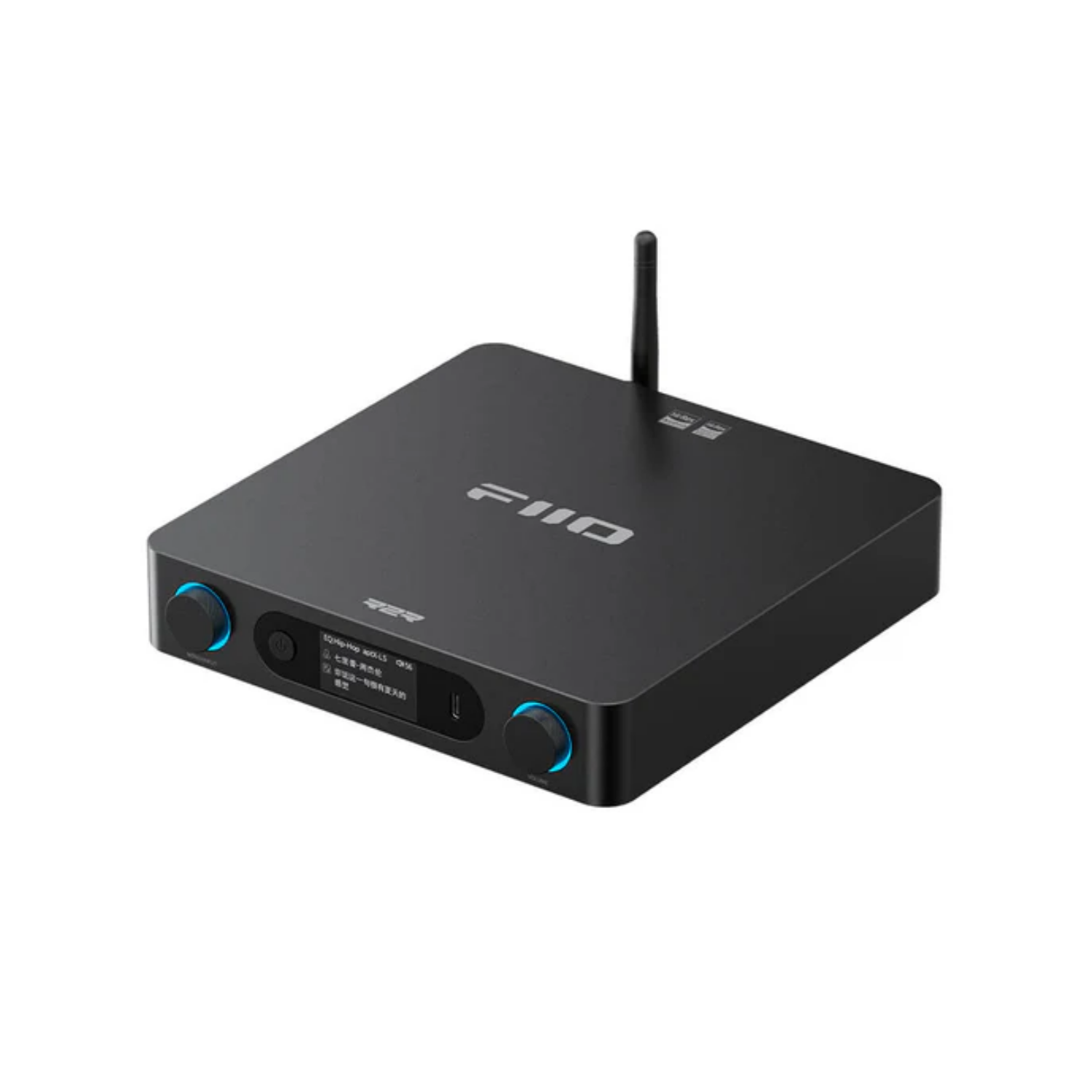
The FiiO BR15 R2R is a high-resolution Bluetooth audio receiver that adds wireless streaming to an existing stereo, powered speakers, or amplifier. It streams from a phone, tablet, or computer over Bluetooth using aptX Lossless, LDAC, and aptX Adaptive, or works as a wired decoder over USB-C, coaxial, or optical input. Inside is FiiO's proprietary fully differential 24-bit R2R DAC (quad-channel) with selectable NOS/OS modes, alongside simultaneous RCA and balanced XLR line outputs plus optical and coaxial digital outputs for feeding an external DAC. A 1.47-inch colour display, IR remote, and FiiO Control app support round it out for desk or across-the-room use.
Simcoe Audio Video Insight
The BR15 R2R is really two products in one: a Bluetooth receiver for wireless convenience, and a wired R2R DAC for when you want the best sound quality from a plugged-in source. Because it has both a coaxial/optical input and matching digital outputs, you can also use it purely as a digital pass-through, feeding it a coaxial or optical signal and sending that same signal out to another DAC without touching the R2R conversion at all. For most systems, the fully differential balanced XLR output will outperform the single-ended RCA output on gear that supports balanced input, so use XLR wherever your amp allows it.
Best for the FiiO BR15 R2R: Connect the balanced XLR output to an amp or active speakers that accept balanced input, and use aptX Lossless or LDAC from a compatible phone for wireless listening that doesn't give up much compared to a wired connection.
More Details
Why It Wins
- Quad-Channel R2R DAC: FiiO's fully differential 24-bit resistor-ladder DAC architecture, the same design family used across its higher-end R2R products, in a compact receiver form factor.
- Modern Bluetooth Codec Support: aptX Lossless, LDAC, and aptX Adaptive cover most current high-resolution wireless codecs, alongside standard SBC and aptX HD.
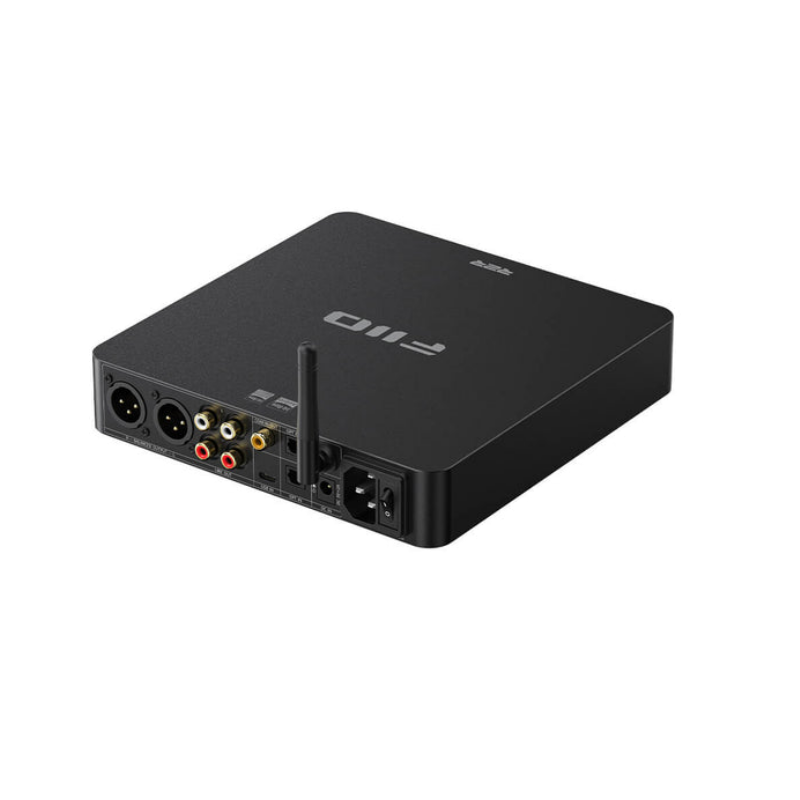
- Simultaneous Balanced and Single-Ended Outputs: RCA and XLR3 line outputs are both active at once, so you're not limited to one connection type per system.
What Makes It Different
Most Bluetooth receivers in this category are wireless-only, using a basic delta-sigma DAC and offering just RCA output. The BR15 R2R pairs its wireless codec support with a genuine R2R resistor-ladder DAC and adds balanced XLR output plus digital pass-through outputs, putting it closer to a small desktop DAC and receiver hybrid than a typical Bluetooth adapter.
Technical Highlights
- USB-C, Coaxial, and Optical Wired Inputs: use it as a wired R2R DAC when you want to bypass Bluetooth entirely.
- Digital Pass-Through Outputs: coaxial and optical digital outputs let you feed a separate DAC without engaging the internal R2R stage.
- 10-Band PEQ: adjustable in-device equalization for tuning the response to your room or speakers.
Buyers Guide
Who This Is For
- The Wireless Retrofitter: has an older stereo or powered speakers with no Bluetooth and wants modern codec support like LDAC or aptX Lossless added without replacing the amp.
- The R2R Curious Listener Without Desk Space: wants FiiO's resistor-ladder DAC sound but doesn't have room for a larger desktop unit, and also wants wireless streaming built in.
- The Multi-Source Listener: keeps a mix of a phone for casual wireless listening and a computer or transport for wired high-resolution playback, feeding the same system.
Ideal Use Case
- Adding Bluetooth to an Existing Stereo: connect RCA or XLR outputs to an amp or receiver that currently has no wireless input.
- A Balanced Front End for Active Speakers: feed the XLR output directly into balanced-input powered monitors or speakers.
- Digital Pass-Through to an External DAC: use the coaxial or optical output to route a signal to a separate DAC while keeping the BR15 R2R as the source switcher.
What To Pair It With
- An Amplifier or Receiver with Balanced XLR Input: takes full advantage of the BR15 R2R's balanced output stage.
- A Phone or Tablet with aptX Lossless or LDAC Support: gets the most out of the receiver's wireless codec support.
- Active Speakers or Monitors: powered speakers with RCA or XLR input pair directly with the BR15 R2R as a wireless-capable source.
Alternative Options
If you want FiiO's R2R sound without the Bluetooth receiver functionality, the K11 R2R or K13 R2R desktop DACs use a similar resistor-ladder approach in a wired-only unit. For a source with a tube stage instead of a purely solid-state R2R circuit, the Warmer R2R trades wireless streaming for tube colouration. The BR15 R2R remains the pick specifically when Bluetooth reception is part of what you need.
FiiO BR15 R2R Bluetooth Receiver with Balanced XLR, LDAC & aptX Lossless Specifications
| General Information | |
|---|---|
| Product Name | FiiO BR15 R2R |
| Brand | FiiO |
| Speaker Type | High-Resolution Bluetooth Audio Receiver / Decoder |
| Working Modes | USB DAC mode / Coaxial decoding mode / Optical decoding mode / Bluetooth receiving mode |
| Colours | Black / Silver |
| Control Methods | Front knobs (menu + volume), IR remote, FiiO Control support |
| Display | 1.47-inch colour LCD |
| Audio / Decoding | |
| Bluetooth Chip | Qualcomm QCC5181 |
| Bluetooth Reception | 6.0 |
| Supported Bluetooth Codecs | LC3, SBC, aptX, aptX HD, aptX Adaptive, LDAC, aptX Lossless |
| Master Control | ESP32-S3 |
| USB Decoding Platform | XU316 |
| DAC Architecture | FiiO proprietary quad-channel, fully differential true 24-bit R2R DAC |
| Oversampling Settings | OFF / 96K / 192K / 384K |
| PEQ | 10-band PEQ |
| MQA | Supports MQA full decoding (PEQ = OFF) |
| Max Supported Sampling Rate (PEQ = OFF) | USB: 384kHz/32bit; DSD256 |
| Coaxial Input Decoding (PEQ = OFF) | Up to 192kHz/24bit; DSD64 |
| Optical Input Decoding (PEQ = OFF) | Up to 192kHz/24bit; DSD64 |
| Digital Outputs | Coaxial out up to 192kHz/24bit; DSD64 • Optical out up to 192kHz/24bit; DSD64 |
| Connectivity | |
| USB Ports | 2 × USB-C (data transmission ports) |
| Coaxial Input/Output | RCA port (shared input/output) |
| Optical Input | Optical port |
| Optical Output | Optical port |
| Balanced Line Output | XLR3 balanced port |
| Single-Ended Line Output | 2 × RCA line out |
| Remote Control | IR remote supported (included remote) |
| Analog Output Performance | |
| RCA Line Output Level | 2.2Vrms (1kHz @ 10kΩ) |
| XLR3 Line Output Level | 4.4Vrms (1kHz @ 10kΩ) |
| RCA THD+N | About 0.017% (1kHz/0dB @ 10kΩ) |
| XLR3 THD+N | About 0.015% (1kHz/0dB @ 10kΩ) |
| RCA SNR | ≥116dB (A-weighted) |
| XLR3 SNR | ≥119dB (A-weighted) |
| RCA Crosstalk | ≥110dB |
| XLR3 Crosstalk | ≥112dB |
| RCA Noise Floor | <3.3uV (A-weighted) |
| XLR3 Noise Floor | <5.1uV (A-weighted) |
| RCA Dynamic Range | ≥110dB |
| XLR3 Dynamic Range | ≥112dB |
| Frequency Response (RCA/XLR) | 20Hz–20kHz: attenuation <0.2dB • 20Hz–65kHz: attenuation <2.9dB |
| Power | |
| Power Supply | AC 100–240V~ 50/60Hz or DC 5V / ≥2A (either-or) |
| Battery | No battery |
| Power Button | Yes |
| Physical Specifications | |
| Dimensions | About 210 × 188 × 42 mm (including feet) |
| Weight | About 760 g |
| Firmware & Updates | |
| MCU Firmware Update | Front USB-C port |
| XMOS Firmware Update | Front or rear USB-C port |
| Bluetooth Firmware Update | Via FiiO Control |