





FiiO K11 R2R DAC and Headphone Amplifier (Black)
We are an authorized FiiO dealer!
Email Your Question
Pairs well with
Free Shipping
We only ship within Canada. Items purchased online qualify for free shipping!
30 Day Returns
All products are eligible for returns within 30 days. All original packaging is required.
Installation & Calibration
Ask about our installation services on home theatre & stereo equipment along with automation.
FiiO K11 R2R DAC and Headphone Amplifier (Black)
Overview
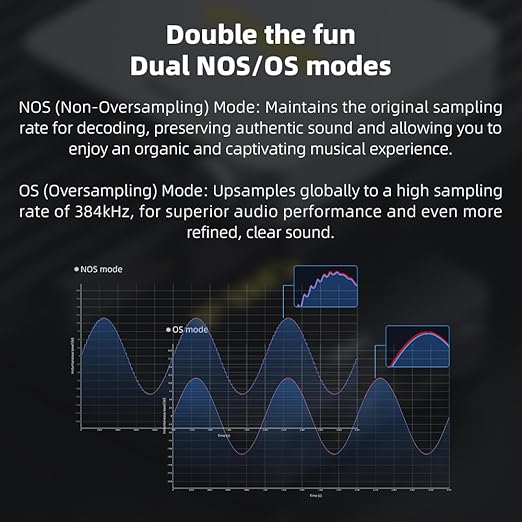
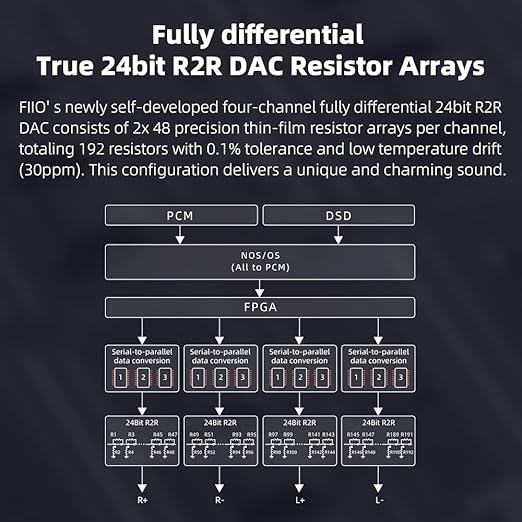
The FiiO K11 R2R is a desktop DAC and headphone amplifier built around FiiO's own fully differential, 4-channel 24-bit R2R resistor-ladder DAC — a discrete-resistor design rather than the delta-sigma chips found in most desktop DACs at this price. That DAC uses 192 precision thin-film resistors to convert the signal, which is what gives R2R DACs their characteristically natural, analog-like presentation, and a switchable NOS (Non-Oversampling) and OS (Oversampling) mode lets you choose between the DAC's raw, unprocessed sound or a smoother oversampled character depending on the recording. It takes USB-C, optical, and coaxial digital inputs and outputs through 6.35mm single-ended and 4.4mm balanced headphone jacks plus an RCA line-out, with up to 1300mW+1300mW balanced into 32 ohms. It's built for desktop listeners who want to hear a resistor-ladder DAC's sound signature alongside real amplifier power, in a single compact black chassis.
Simcoe Audio Video Insight
The NOS/OS switch is the feature worth spending time with rather than leaving on the default setting: NOS mode gives you the R2R DAC's rawer, more unprocessed character, while OS mode smooths things out with digital oversampling. Neither is objectively "correct" — it depends on the recording and your headphones, so it's worth switching back and forth on a few familiar tracks to hear which one you prefer, rather than assuming one mode is always better.
Best for the FiiO K11 R2R DAC and Headphone Amplifier (Black): Start in OS mode for most modern, well-mastered recordings, then switch to NOS mode for older or more dynamically simple tracks where the R2R DAC's rawer character tends to shine.
More Details
Why It Wins
- FiiO self-developed 4-channel 24-bit R2R DAC: Built from 192 precision thin-film resistors rather than a delta-sigma chip, for the smoother, more analog-like presentation R2R designs are known for.
- Switchable NOS/OS playback modes: Lets you choose between the DAC's raw, unprocessed output and a digitally oversampled signal depending on the source material.
- Up to 1300mW balanced output: Enough power into 32 ohms to properly drive most desktop headphones, not just low-power in-ear monitors.
What Makes It Different
Most DAC/amps at this price point use an off-the-shelf delta-sigma chip from a handful of major DAC chip makers. The K11 R2R instead uses FiiO's own resistor-ladder design, which trades some of the ultra-low measured distortion figures of chip-based DACs for a different, often warmer-sounding presentation — and gives you the NOS/OS switch to move between the two characters. Compared to the standard K11, which uses a Cirrus Logic chip DAC in the same chassis, the R2R version is the pick for listeners specifically curious about resistor-ladder conversion rather than chip-based decoding.
Technical Highlights
- 192 precision thin-film resistors (0.1% tolerance): The core of the R2R DAC design, built to tight tolerances to keep channel matching and linearity consistent.
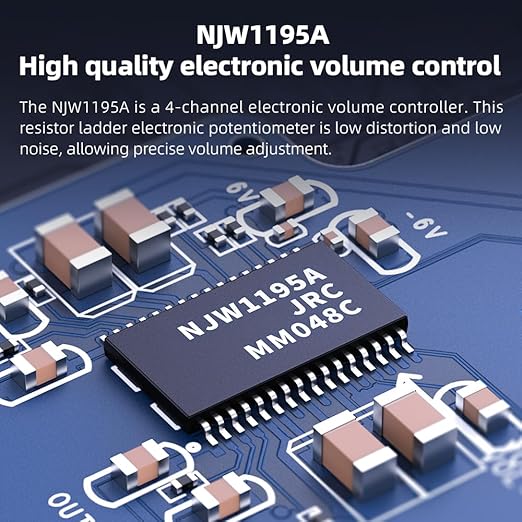
- NJW1195A electronic volume control with 3 gain levels and 3 volume curves: Gives you fine control over output level and headphone matching across a wide impedance range.
- PCM up to 384kHz/32-bit and native DSD256 over USB: Covers the great majority of high-resolution music files without needing format conversion.
Buyers Guide
Who This Is For
- The listener curious about R2R sound: Anyone who has read about resistor-ladder DACs and wants to hear the difference for themselves without paying flagship prices for the experience.
- The owner of higher-impedance desktop headphones: The 1300mW balanced output gives real amplifier headroom to headphones that a basic USB dongle can't drive properly.
- Someone who wants tone control without software EQ: The NOS/OS switch and three gain levels offer a hardware way to shape the sound rather than relying on an app-based equalizer.
Ideal Use Case
- Desktop reference listening: Connected to a PC or Mac over USB-C as a dedicated music source separate from onboard audio.
- A/B comparison listening: Switching between NOS and OS modes on the same tracks to hear how oversampling changes the presentation.
- Simple two-channel desktop system: Feeding a small integrated amp or active speakers through the RCA line-out.
What To Pair It With
- Higher-impedance dynamic headphones: The balanced 1300mW output and adjustable gain give the K11 R2R enough power to drive them without strain.
- A dedicated USB source like a PC or Mac: USB-C is the only input that unlocks the full 384kHz/32-bit and native DSD256 support.
- A basic desktop speaker setup: The RCA line-out lets it function as a source for a small powered-speaker system.
Alternative Options
If you'd rather hear a chip-based DAC in the same chassis and price range, the standard FiiO K11 uses a Cirrus Logic CS43198 DAC instead of the R2R design, with a similar set of inputs and outputs. For a bigger step up in R2R architecture and output power, FiiO's K13 R2R uses a larger four-channel R2R design with considerably more headphone power and adds Bluetooth input.
FiiO K11 R2R DAC and Headphone Amplifier (Black) Specifications
| FiiO K11 R2R DAC and Headphone Amplifier (Black) Specifications | |
|---|---|
| Brand | FiiO |
| Model | K11 R2R |
| Type | Desktop DAC and Headphone Amplifier |
| DAC Architecture | FiiO self-developed, fully differential 4-channel 24-bit R2R DAC — 192 precision thin-film resistors (0.1% tolerance, 30ppm drift) |
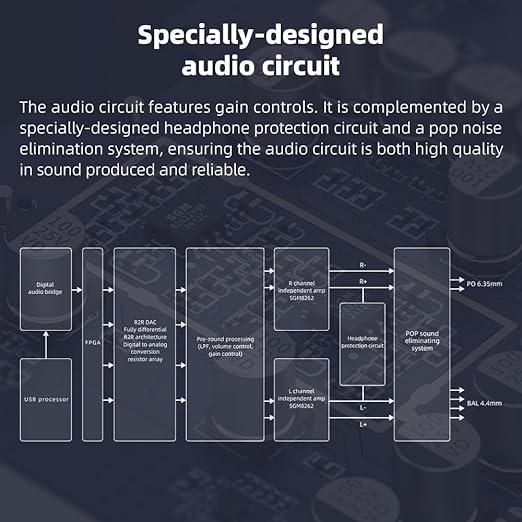
| Key Chipsets | USB Receiver: SA9312L | Amplifier: SGM8262 (x2) | Volume Control: NJW1195A | MCU: GD32F303RE |
| Max Sampling Rate (USB) | PCM up to 384kHz/32-bit, native DSD256 |
| Max Sampling Rate (Coaxial) | PCM up to 192kHz/24-bit |
| Max Sampling Rate (Optical) | PCM up to 96kHz/24-bit |
| Oversampling Modes | Switchable NOS (Non-Oversampling) and OS (Oversampling) |
| Inputs | USB-C, Optical (TOSLINK), Coaxial (RCA) |
| Outputs | 6.35mm Single-Ended (headphone), 4.4mm Balanced (headphone), RCA Line Out, RCA Coaxial Digital Out (USB mode only) |
| Output Power (6.35mm Single-Ended) | 660mW @16Ω, 460mW @32Ω, 50mW @300Ω (per channel, THD+N<1%) |
| Output Power (4.4mm Balanced) | 520mW @16Ω, 1300mW @32Ω, 220mW @300Ω (per channel, THD+N<1%) |
| Adaptive Impedance Range | Single-Ended: 8–150Ω | Balanced: 8–350Ω |
| Gain Settings | 3 levels (Low, Medium, High) |
| Volume Curves | 3 selectable curves |
| Signal-to-Noise Ratio (SNR) | ≥115dB (A-weighted) |
| Total Harmonic Distortion (THD+N) | About 0.025% (1kHz/0dB@10KΩ, line out) |
| Frequency Response | 20Hz–50kHz (damping <1.3dB, headphone out) |
| Power Supply | External 12V DC, 2A |
| Dimensions | 147mm x 133mm x 32.3mm / 5.79" x 5.24" x 1.27" (including feet) |
| Weight | About 420g (14.8oz) |
| Color Options | Black, Silver |
| Compatible Devices | PC, Mac, Smartphones, Tablets, HiFi Players |
| Capacitors | High-quality Beryl solid capacitors |
| Warranty | 1 Year |
Simcoe Audio Video Installation
Our professional team of designers and installers provide custom design solutions and installation for existing homes and new builds. We work with home owners, home builders and designers to create scalable solutions tailored to you.
Home Theatre & Media Rooms | Home Audio Solutions | AV Automation